
News
CBAMBOO Insights #3
21 Mar 2025
This month, the European Commission machine kicked into high gear and published a huge range of CBAM updates. We've gone through them and compiled them all in this edition.
Commission raises threshold for CBAM and simplifies accounting rules
Low-volume importers will be exempted from having to make CBAM declarations, as part of reforms to simplify the system announced by the European Commission.
The Commission proposed a new minimum threshold for CBAM of 50 tonnes (or roughly 100 tCO₂e) of CBAM goods. This will focus CBAM on the higher-emitting companies only, bringing a welcome level of relief to companies with minimal emissions who risked being caught by CBAM.
The proposal, part of the so-called Omnibus legislation announced on 26 February, gives businesses and EU Member States more flexibility by delaying all 2026 certificate purchases to February–August 2027.
It also lowers the required level of certificate holding from 80% to 50% per quarter, easing the strain on working capital for corporates.
But although the payment schedule has been extended, the economic burden of CBAM is unchanged. Companies must still ensure that they can purchase certificates to cover their 2026 imports. These will be priced at the quarterly average EU ETS rate.
Other changes include the following:
- To simplify emissions accounting, default values will reflect the ten highest-emitting countries, ensuring they remain punitive
- For steel and aluminium, reporting will no longer cover downstream finishing, shifting the focus to raw material inputs
- Emissions from EU-made precursors will also be zeroed, reducing reporting complexity
- Fines for non-compliance for those still in scope are to be tripled
Importers must get authorised or lose access to EU from next year
The European Commission released the rules for CBAM importer authorisation on 18 March 2025, providing much-needed clarity to businesses.
From 28 March 2025, importers will be able to apply for "CBAM authorised status" and will receive a result within 120 days.
Failure to obtain authorisation will result in a complete import ban in 2026.
How can you get authorised?
- Importers of CBAM goods must apply for authorisation as CBAM declarants using the CBAM Registry
- Applications must be submitted to the relevant Member State authority on the Registry itself
Required documentation:
- Applicants must provide an EORI number, proof of establishment in the EU, and a declaration of compliance with legal obligations
This new requirement marks a major compliance milestone. Businesses should prepare now to avoid disruptions. Importers who fail to secure authorisation will be barred from bringing goods into the EU from 1 January 2026.
Commission pushes CBAM as solution for metal industry woes
Struggling with global overcapacity and soaring energy costs, Europe's steel and aluminium industries have been demanding urgent support.
On 19 March, as part of its Action Plan for Steel and Metals, the European Commission confirmed plans to accelerate CBAM expansion to help revitalise the metal sector while achieving climate goals.
The plans include extending CBAM to certain finished aluminium and steel products, with details to be announced in Q4 2025. While the final product list remains undecided, the move reinforces CBAM's role in shielding Europe's core industries from economic uncertainty.
To strengthen enforcement, Commissioner Stéphane Séjourné pledged tougher anti-circumvention measures, ensuring businesses cannot bypass CBAM obligations.
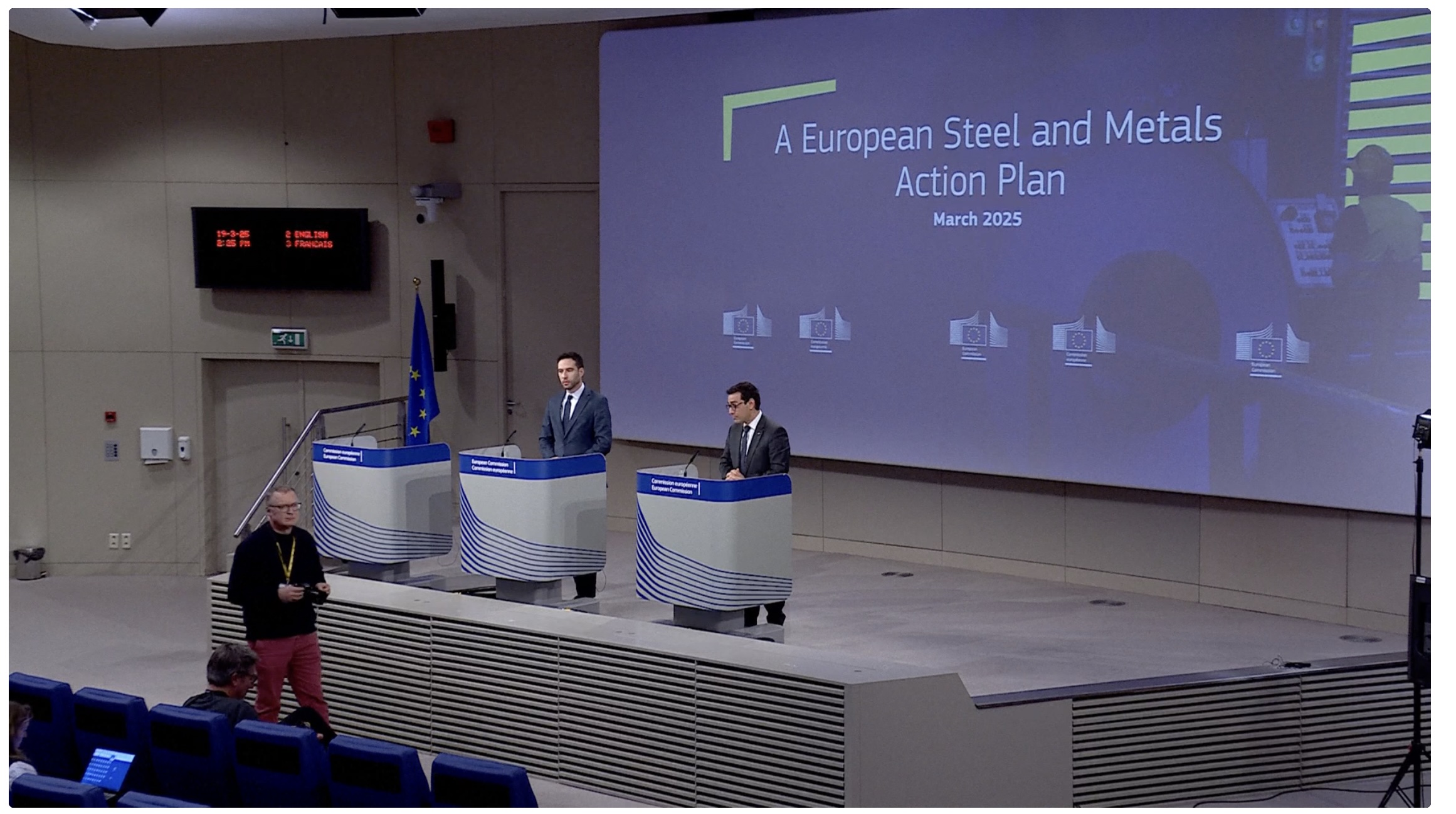
The plan also acknowledged mounting industry concerns about competitiveness risks for European metal exports. A formal proposal outlining potential solutions will be published by June 2025.
Beyond metals, France, Italy and Poland are pushing for a broader sectoral expansion as the Commission finalises its comprehensive review of CBAM's transitional phase by the end of 2025.
By establishing a new expansion timeline, policymakers make it clear that CBAM is here to stay. Importers and manufacturers must prepare for a broader scope and stricter compliance requirements in the coming years.
Meet CBAMBOO at Fastener Fair Global in Stuttgart
The fastener industry is a high-volume part of the metals sector that will be transformed by CBAM.
The substantial tonnages of metal involved in making these essential industrial components translate to significant embedded carbon emissions. That makes compliance a serious challenge, but it also creates huge opportunities for fastener companies to make emissions reduction a business advantage.
The CBAMBOO team will be travelling to Stuttgart and setting up our stand at Fastener Fair Global. Come and find us in Hall 7, stand 7-3738.
From January 2026, stricter reporting rules and carbon costs at the EU border will not only increase administrative burdens but also reshape market competitiveness.
Companies that fail to prepare risk higher costs and supply chain disruptions. Accurate emissions data will be essential for securing competitive pricing and maintaining EU market access.
Businesses that proactively manage CBAM obligations will have a distinct advantage, whether they import or export. The CBAMBOO Platform provides fastener importers with the tools to streamline compliance, minimise risks, and gain a cost advantage through better carbon management.