01
Introduction to CBAM
The Carbon Border Adjustment Mechanism (CBAM) is one of the most significant pieces of trade and climate legislation the European Union has introduced in decades. It came into force in October 2023 and represents a fundamental shift in how the EU approaches carbon pricing at its borders.
At its core, CBAM is designed to solve a problem known as carbon leakage. When the EU places a price on carbon emissions through its Emissions Trading System (EU ETS), European manufacturers face higher production costs than competitors in countries with weaker or no carbon pricing. This creates an incentive to import goods from those countries instead — effectively outsourcing the emissions rather than reducing them. CBAM closes that gap by ensuring that certain imported goods carry a carbon cost equivalent to what an EU producer would have paid.
The mechanism is part of the EU’s Fit for 55 package, which aims to reduce greenhouse gas emissions by at least 55% by 2030 compared to 1990 levels, on the path to climate neutrality by 2050.
02
The origin of CBAM
CBAM as a concept
The idea of a carbon border adjustment is not new. Economists and policymakers had debated the concept for years, arguing that any serious domestic carbon price would be undermined without some form of border protection. The political challenge was significant — border carbon adjustments risk being seen as protectionist measures and can conflict with World Trade Organisation (WTO) rules if not carefully designed.
The European Commission began formally developing CBAM proposals around 2019 and 2020, as part of the European Green Deal. The goal was to design a mechanism that was legally defensible under WTO rules by basing it on environmental grounds and ensuring it applied equally to domestic and imported goods. After considerable negotiation, the CBAM Regulation (EU) 2023/956 was adopted in May 2023, with the transitional phase beginning in October of that year.
Several other jurisdictions have watched the EU’s approach closely. The UK, Canada, and others have subsequently explored similar mechanisms, and CBAM is widely seen as a template for how major economies might eventually coordinate carbon pricing across borders.
The EU Emissions Trading System
To understand CBAM, you first need to understand the EU ETS, which has been the cornerstone of European climate policy since 2005. The EU ETS is a cap-and-trade system: the EU sets a limit (a cap) on the total amount of greenhouse gases that can be emitted by covered industries — power generation, heavy industry, aviation, and others. Companies receive or purchase allowances, each representing one tonne of CO₂. If they emit less than their allowance, they can sell the surplus; if they emit more, they must buy additional allowances.
Over time, the cap is reduced, making allowances scarcer and more expensive, which drives investment in cleaner technology. The EU ETS carbon price has risen significantly over the past decade, reaching highs of over €100 per tonne of CO₂ in recent years. This is precisely what makes CBAM necessary: the higher the EU carbon price climbs, the greater the competitive disadvantage faced by European producers relative to those in countries with no equivalent cost.
The customs union
The second piece of architecture that shapes how CBAM works is the EU customs union. Understanding it explains not just where CBAM applies, but why it can be enforced consistently across 27 member states without each country needing its own separate mechanism.
The EU customs union means that all member states operate as a single territory for international trade. Goods moving between member states face no customs formalities — no tariffs, no border declarations, no checks at internal frontiers. But when goods arrive from outside the EU — from the UK, Turkey, China, India, or anywhere else — they cross a single external border and are subject to the EU’s Common External Tariff and all applicable trade regulations.
CBAM is applied at that external border. It is not a charge levied somewhere within the EU supply chain after goods have already entered — it is a condition of entry into the customs union. When steel, cement, aluminium, or any other covered product crosses from a non-EU country into EU customs territory, that is the moment CBAM obligations are triggered.
This matters because it means the mechanism is uniform. An importer bringing goods into Germany faces the same CBAM requirements as one bringing the same goods into France or the Netherlands. There is no regulatory arbitrage within the single market — no route in through a less stringent member state. The external border is, by design, a single line.
CBAM also uses the existing customs infrastructure rather than creating an entirely parallel system. Covered goods are identified using their Combined Nomenclature (CN) codes — the same commodity classification system used across all EU customs declarations. Importers and their agents will already be familiar with this framework.
03
Scope and coverage
Coverage
CBAM applies to a specific list of goods that are imported into the EU from non-EU countries. The goods covered are those that, if produced inside the EU, would be subject to a carbon cost under the EU Emissions Trading System. The current categories are:
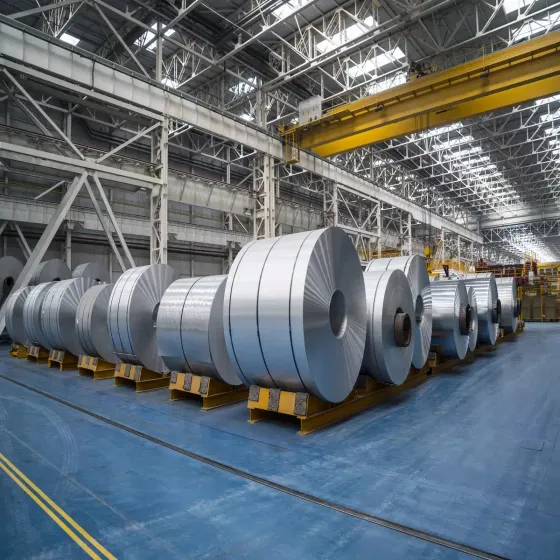
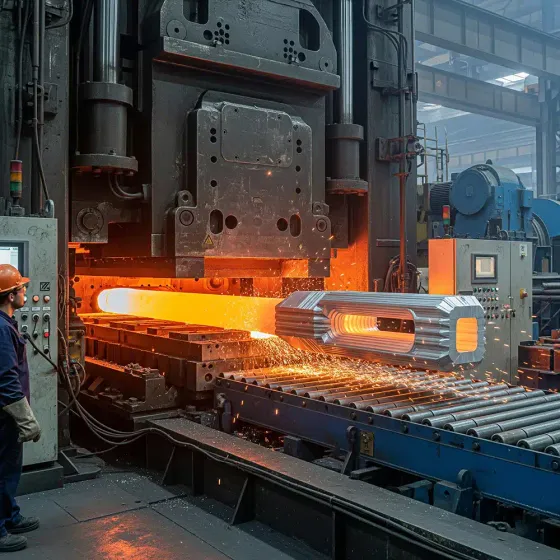
- Iron and steel — including a wide range of finished and semi-finished products such as hot-rolled coil, rebar, wire rod, pipes, and structural sections
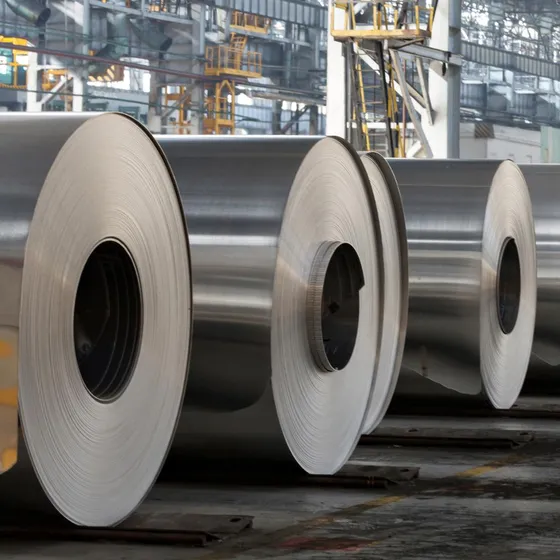
- Aluminium — including primary and secondary aluminium, as well as downstream products such as extrusions, sheets, and foil
- Cement — including clinker and most common cement types
- Fertilisers — including ammonia, nitric acid, urea, and mixed nitrogen fertilisers
- Hydrogen — covering both green and grey hydrogen
- Electricity — when imported directly into the EU grid
The exact products within each category are defined by their Combined Nomenclature (CN) codes — the commodity classification system used across all EU customs declarations. Whether CBAM applies to a specific shipment depends on the CN code declared at the border, not simply on the general product label. A business importing “steel products” may find that some of its product lines are covered and others are not, depending on the precise code.
Threshold
Simple versus complex goods
CBAM distinguishes between simple and complex goods, as it affects how embedded emissions are calculated.
A simple good is one that has no CBAM-covered materials as inputs in its production. Primary aluminium ingot is an example — it is produced directly from raw materials, without using another CBAM-covered product as a precursor.
A complex good is one that uses CBAM-covered goods as inputs during production. Steel sheets are an example: they are produced using iron ore pellets or sinters, which are themselves CBAM-covered precursors. For complex goods, the embedded emissions calculation must include not just the emissions from the final production stage, but also the emissions associated with those upstream precursor inputs.
This distinction matters practically because collecting verified emissions data for complex goods is significantly harder. An importer of steel extrusions, for example, may need their supplier to trace emissions data across multiple production stages and suppliers, not just from the final mill.
Who is responsible for compliance?
CBAM places the compliance and legal obligation on the EU importer, referred to in the regulation as the authorised declarant. It is the importer, not the foreign producer, who must register, report, and ultimately purchase and surrender CBAM certificates. The foreign producer is not directly regulated by the EU, but they play a critical role in providing the emissions data that their EU customers need in order to comply accurately and cost-effectively.
04
Reporting
What is the CBAM Registry?
The CBAM Registry is the EU’s central online platform for managing all aspects of CBAM compliance. It is operated by the European Commission and is where importers apply for authorised declarant status, submit their annual declarations, and purchase and surrender CBAM certificates. Think of it as the administrative home of CBAM — the equivalent of a tax filing portal, but specifically for carbon obligations on imports.
What does reporting involve?
During the transitional period (October 2023 to December 2025), importers were required to submit quarterly reports estimating the embedded emissions in their CBAM imports. From 1 January 2026, this has been replaced by an annual declaration system.
Under the definitive phase, importers must submit a single annual CBAM declaration covering all in-scope imports made during the previous calendar year. The first annual declaration — covering imports made in 2026 — is due by 30 September 2027.
Each declaration must include:
- the total quantity of each CBAM good imported, broken down by country of origin
- the embedded emissions associated with those goods, expressed in tonnes of CO₂ equivalent
- the number of CBAM certificates being surrendered to cover those emissions
- details of any carbon price paid in the country of production, which may reduce the certificate obligation
Although quarterly external reporting ends in 2026, it remains good practice to prepare data on a quarterly basis internally. This makes the annual declaration more manageable, helps with financial forecasting, and reduces the risk of errors accumulating over the year.
06
The CBAM cost formula
How is the CBAM cost calculated?
From 1 January 2026, importing CBAM-covered goods into the EU carries a financial cost. That cost is not a flat tariff — it varies depending on how carbon-intensive the imported goods are, what carbon price is currently set by the EU ETS, and whether any equivalent carbon price has already been paid in the country of production.
The formula is:
Each of these terms is explained below.
Embedded emissions
This is the amount of greenhouse gas emissions embedded in each tonne of the imported good, expressed in tonnes of CO₂ equivalent per tonne of product (tCO₂e/t). Ideally, this figure comes from verified, installation-specific data provided by the supplier. Where that data is not available, a default value set by the European Commission is used instead — and defaults are deliberately set at a conservative, higher level. The difference between using actual data and default values can be substantial.
Benchmark
The benchmark is the emissions threshold set by the European Commission for each product category. It represents the level of emissions that an efficient EU producer of that good would typically emit. Only emissions above this benchmark are subject to a CBAM cost — the idea being that you are paying for the carbon intensity that exceeds what a comparable EU producer would have been allowed.
Benchmarks are set at the product and CN code level. For simple goods, a single benchmark applies. For complex goods, importers must use an installation-level benchmark calculated by the producer.
The phase-in rate
CBAM is being introduced gradually, in parallel with the phase-out of free allowances under the EU ETS. The phase-in rate reflects what proportion of embedded emissions are subject to the CBAM cost in a given year. As free EU ETS allowances are reduced year on year, the phase-in rate rises, and so does the effective CBAM cost. By the time free allowances are fully phased out (expected by 2034), the phase-in rate will reach 100%.
The CBAM certificate price
CBAM certificates are the financial instrument used to settle the carbon obligation. Their price is linked to the EU ETS carbon price — specifically, the average weekly closing price of EU Allowances (EUAs). In 2026, certificate prices are set quarterly; from 2027, they will be updated weekly. This means the cost of CBAM exposure fluctuates with the carbon market.
Carbon price paid abroad
If the country of production has its own carbon pricing mechanism — a carbon tax or an emissions trading scheme — the cost already paid can be deducted from the CBAM obligation. This avoids double-charging and is designed to make CBAM compliant with international trade rules. See the dedicated section on carbon price deductions for more detail.
07
Methodology
CBAM uses a bespoke accounting methodology developed by the European Commission, distinct from the GHG Protocol, ISO 14064, or product carbon footprinting standards. It is designed to measure emissions at the production level in a way that makes imported goods directly comparable to goods produced under the EU ETS.
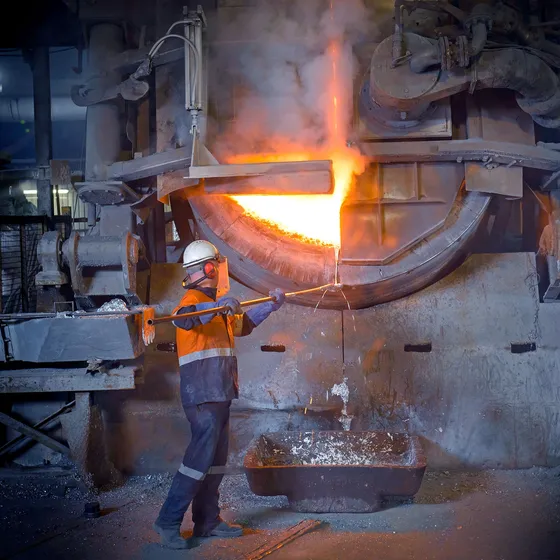
The core concept is embedded emissions: the greenhouse gases released during the production of a good, up to the point it leaves the facility. Direct process and combustion emissions are always included; indirect emissions from purchased electricity are included for certain sectors (cement and fertilisers). Transport, end-of-life, and broader value chain emissions are out of scope.
This differs from the GHG Protocol in two important ways. First, CBAM is product-level accounting, not corporate-level — a supplier with a well-developed Scope 1 and 2 inventory has not automatically produced usable CBAM data. Second, the Scope 1/2/3 categories do not map cleanly onto CBAM’s direct/indirect structure, which can cause confusion when trying to repurpose existing carbon reports. Carbon offsets also have no standing under CBAM: credits purchased to offset corporate emissions cannot reduce a CBAM liability.
Compared to product carbon footprinting (PCF), CBAM is narrower in scope — a PCF typically extends further upstream and may include logistics and use-phase emissions, whereas CBAM stops at the factory gate. A supplier with an existing PCF may have a useful head start on data collection, but the CBAM calculation must still follow the specific rules set out in the implementing regulations rather than a general PCF methodology.
08
Verification
What is verification and why does it matter?
For an importer to use actual embedded emissions data rather than EU default values, that data must be independently verified by an accredited third-party verifier. Verification is not optional — without it, the importer cannot rely on the producer’s reported figures, and defaults apply for the entire consignment. Given that defaults are set conservatively and typically exceed actual emissions for well-managed installations, the cost difference can be substantial.
The monitoring plan
Underpinning the entire verification process is the Monitoring Plan — a formal document prepared by the installation operator that must be in place before the reporting year begins.
The plan sets out the methodology the installation will use to generate its emissions data: the system boundaries applied, how activity data is collected at each production stage, the emissions factors used, and the quality control procedures governing the process.
When verifiers assess an installation’s data, they are checking whether the figures were produced in accordance with this pre-agreed methodology. An incomplete or inconsistently applied monitoring plan gives verifiers little to work with and significantly increases the risk of a failed verification. A well-prepared one reduces both verifier time and compliance risk.
Importers should ask their suppliers whether a Monitoring Plan is in place as a basic due diligence step — it is the clearest early signal of whether a supplier is on track to produce verifiable actual emissions data.
What do verifiers assess?
Accredited verifiers do not simply check the final emissions figure. They assess the entire methodology used to arrive at it, including:
- how system boundaries were defined (i.e. which processes and emissions sources were included or excluded)
- how activity data was collected and recorded at the installation
- whether the emissions factors applied are appropriate and consistent with CBAM requirements
- how precursor emissions were calculated and sourced, for complex goods
- whether the data governance and record-keeping practices are adequate to support the claimed figures
The on-site audit requirement
In the first year of formal verification — covering emissions data for the 2026 calendar year — producers are required to undergo an on-site audit. This means a verifier physically visits the installation to inspect processes, review documentation, and interview relevant staff. Remote-only verification is not sufficient for the initial cycle.
This requirement has significant practical implications for timing. On-site audits take time to schedule, prepare for, and complete. Verification capacity across accredited bodies is finite and tightening as more installations seek verification simultaneously. Producers who leave this process late risk being unable to complete verification before the September 2027 declaration deadline — at which point defaults apply for that entire year.
What happens if verification fails?
If a producer’s verification fails, their actual data cannot be used. The importer must then fall back on default values for those goods, absorbing the cost difference.
09
CBAM certificates
What are CBAM certificates?
CBAM certificates are the financial instrument through which importers settle their carbon obligation under the definitive phase. Each certificate represents one tonne of CO₂ equivalent of embedded emissions. When an importer submits their annual declaration, they must surrender enough certificates to cover the net embedded emissions in their imports for that year — after applying benchmarks, phase-in rates, and any deductions for carbon prices paid abroad.
Certificates are purchased through the CBAM Registry. They are not tradeable on the open market in the way that EU ETS allowances are — they can only be bought from and surrendered to the Registry, and unused certificates can be resold back to the competent authority, but not to third parties.
How is the certificate price set?
The price of CBAM certificates is directly linked to the EU ETS carbon price. In 2026, the certificate price is set quarterly, based on the average weekly closing price of EU Allowances (EUAs) during that quarter. From 2027 onwards, pricing moves to a weekly basis — meaning the cost of certificates will fluctuate more frequently, introducing greater exposure to carbon market movements.
This linkage is intentional: it ensures that imported goods face the same carbon price signal as goods produced inside the EU, rather than a fixed tariff that could diverge from the actual ETS price over time.
The quarterly holding requirement
From 2027, importers are required to hold a minimum number of certificates on an ongoing basis throughout the year — they cannot simply wait until the September declaration deadline and purchase everything at once. Specifically, by the end of each quarter, an importer must hold certificates equivalent to at least 50% of the embedded emissions in their CBAM imports for that quarter.
This creates a treasury management consideration: importers need to monitor their import volumes and emissions data on a rolling basis, purchase certificates throughout the year, and manage the risk that certificate prices may rise between the point of purchase and the point of surrender.
Surrendering certificates
The full certificate surrender for a given year takes place when the annual declaration is submitted — by 30 September of the following year. So certificates covering 2026 imports must be surrendered by 30 September 2027, alongside the first annual declaration.
Any certificates purchased but not needed — because actual emissions came in lower than estimated, or because imports were lower than forecast — can be repurchased by the competent authority. However, the buyback price may differ from the purchase price depending on market movements, so over-purchasing carries its own financial risk.
Practical consideration
Because certificate prices track the EU ETS, importers are indirectly exposed to carbon market volatility. A business importing large volumes of steel or aluminium will want to consider whether to purchase certificates early (locking in a known cost but accepting commitment risk) or closer to the surrender deadline (retaining flexibility but accepting price risk). This is a relatively new type of financial exposure for most importers and may warrant involvement from treasury or finance teams who are not typically engaged in trade compliance.
10
Carbon price paid and deductions
What is the deduction for carbon prices paid abroad?
One of the principles underpinning CBAM is that it should not result in double-charging. If a producer in a third country has already paid a carbon price — through a domestic carbon tax or an emissions trading scheme — that cost can be deducted from the CBAM obligation. The deduction is calculated on a per-tonne basis: the carbon price effectively paid abroad, expressed as a cost per tonne of CO₂ equivalent, is subtracted from the CBAM certificate cost before the final obligation is determined.
Which carbon pricing mechanisms qualify?
The European Commission’s implementing rules, published in May 2026, formally define the mechanisms that are eligible for a deduction. These are legally binding carbon pricing instruments only — voluntary offset schemes and non-binding programmes do not qualify. Eligible mechanisms include:
- emissions trading systems (including baseline-and-credit models)
- carbon taxes, including those applied at the point of source or via fuel levies
- refunds and rebates linked to specific production emissions
- carbon credits from domestic crediting mechanisms
- carbon credits under Article 6 of the Paris Agreement, subject to a cap (see below)
A key requirement is that the price must be demonstrably linked to the specific emissions covered by CBAM. Any rebates, exemptions, or compensation that the producer has received must be deducted before calculating the amount eligible for offset.
What is the cap on international carbon credits?
Where a carbon price has been paid using international carbon credits — defined as those arising from mitigation activities outside the producing country, including Article 6.2 and 6.4 mechanisms — these credits may only count towards up to 10% of the reported emissions covered by the carbon pricing mechanism. The Commission introduced this limit to encourage third-country producers to reduce their own emissions directly, rather than offsetting them abroad.
How is the deduction calculated in practice?
Importers can use one of two approaches. The first is to use actual carbon prices, which requires a carbon price report prepared for each relevant installation, certified by an independent and accredited third party. The second is to use default carbon prices that the Commission intends to publish for eligible jurisdictions — a simpler route that reduces compliance costs, particularly where actual emissions data is difficult to obtain.
11
Penalties and enforcement
What are the penalties for non-compliance?
CBAM penalties are deliberately set at a level that makes non-compliance more expensive than compliance. The core penalty mirrors the EU Emissions Trading System: if an importer fails to surrender sufficient CBAM certificates to cover their declared emissions, they face a fine of €100 per tonne of CO₂ equivalent not covered.
Other enforcement risks
Beyond the certificate shortfall penalty, importers face additional risks:
- Failure to register: importing CBAM goods without authorised declarant status can result in sanctions set by the relevant member state. These vary across the EU but can include prohibition from importing CBAM goods until status is obtained.
- Inaccurate declarations: submitting a declaration with materially incorrect emissions data — whether through negligence or the use of unverified data presented as actual values — carries enforcement risk. The Commission has indicated it will take a strict approach to accuracy from the outset of the definitive phase.
- Missing the declaration deadline: the annual declaration for 2026 imports is due by 30 September 2027. Late submission will trigger enforcement action at member state level.
Who enforces CBAM?
Enforcement is carried out at the Member State level, through each country’s national competent authority. The European Commission sets the framework and the penalties, but day-to-day oversight — including checking declarations, following up on missing filings, and issuing sanctions — is the responsibility of national bodies. This means the experience of enforcement may vary somewhat across the EU, at least initially.
12
Timeline and key dates
The transitional period (October 2023 – December 2025)
CBAM came into force in October 2023, but the first two-plus years operated as a transitional, reporting-only phase. During this period, importers were required to submit quarterly reports estimating the embedded emissions in their CBAM imports, but there was no financial obligation — no certificates to purchase, no cost to pay. The purpose was to allow importers and producers to build familiarity with the system, collect data, and prepare for full implementation.
The definitive phase (from 1 January 2026)
The definitive phase began on 1 January 2026. From this date:
- all CBAM-covered goods imported into the EU above 50 tonnes per year are subject to financial liability
- quarterly reporting is replaced by annual declarations
- importers must hold authorised declarant status to import legally
- certificate purchase and surrender obligations apply
The expanding cost over time
Even if an importer’s supply chain does not change at all — same suppliers, same volumes, same emissions intensity — their CBAM cost will rise over time. This is because the phase-in rate increases each year as EU ETS free allowances are withdrawn. A business that budgets for CBAM purely on the basis of 2026 figures will underestimate its future exposure. Long-term procurement and supplier decarbonisation planning should account for this trajectory.
13
CBAM expansion
Where does CBAM go from here?
The current list of CBAM-covered products — steel, aluminium, cement, fertilisers, hydrogen, and electricity — is not the final state of the mechanism. On 17 December 2025, the European Commission formally confirmed that CBAM will expand, with the first major extension focused on downstream products containing steel and aluminium such as machinery, gardening tools, or household items. The final list of covered products is to be confirmed before application in 2028.