
News
CBAMBOO Insights #17
25 May 2026
The EU publishes carbon price reduction rules
The European Commission has published the last missing piece of the Carbon Border Adjustment Mechanism (CBAM) implementation package. The draft act, released on 13 May and still pending Member State approval, sets out how importers can offset carbon costs that their suppliers have already paid at home.
Under the draft rules, producers that are subject to binding, industry-wide carbon pricing — such as an emissions trading system or carbon tax — will be able to factor in a deduction against their clients' CBAM costs.
But those producers will have to jump through multiple hoops to get there:
- Installation operators must first calculate the net amount paid per tonne of embedded emissions in the goods shipped to the EU.
- They must strip out all free allowances, indirect cost compensation, tax exemptions, and refunds.
- An accredited independent person must also certify the report before any rebate is claimed.
- Where default emission values are used for reporting, operators must instead apply the Commission's default carbon prices, which will only be published after summer 2026.
- Despite this delay, the rules essentially apply retroactively, covering all imports from 1 January 2026.
In countries where domestic compliance mechanisms allow carbon credits, these can help offset the CBAM liability. However, voluntary international credits, if accepted as part of a domestic compliance mechanism, are restricted to projects compliant with Article 6 of the Paris Agreement and are capped at 10% of an operator's total emissions.
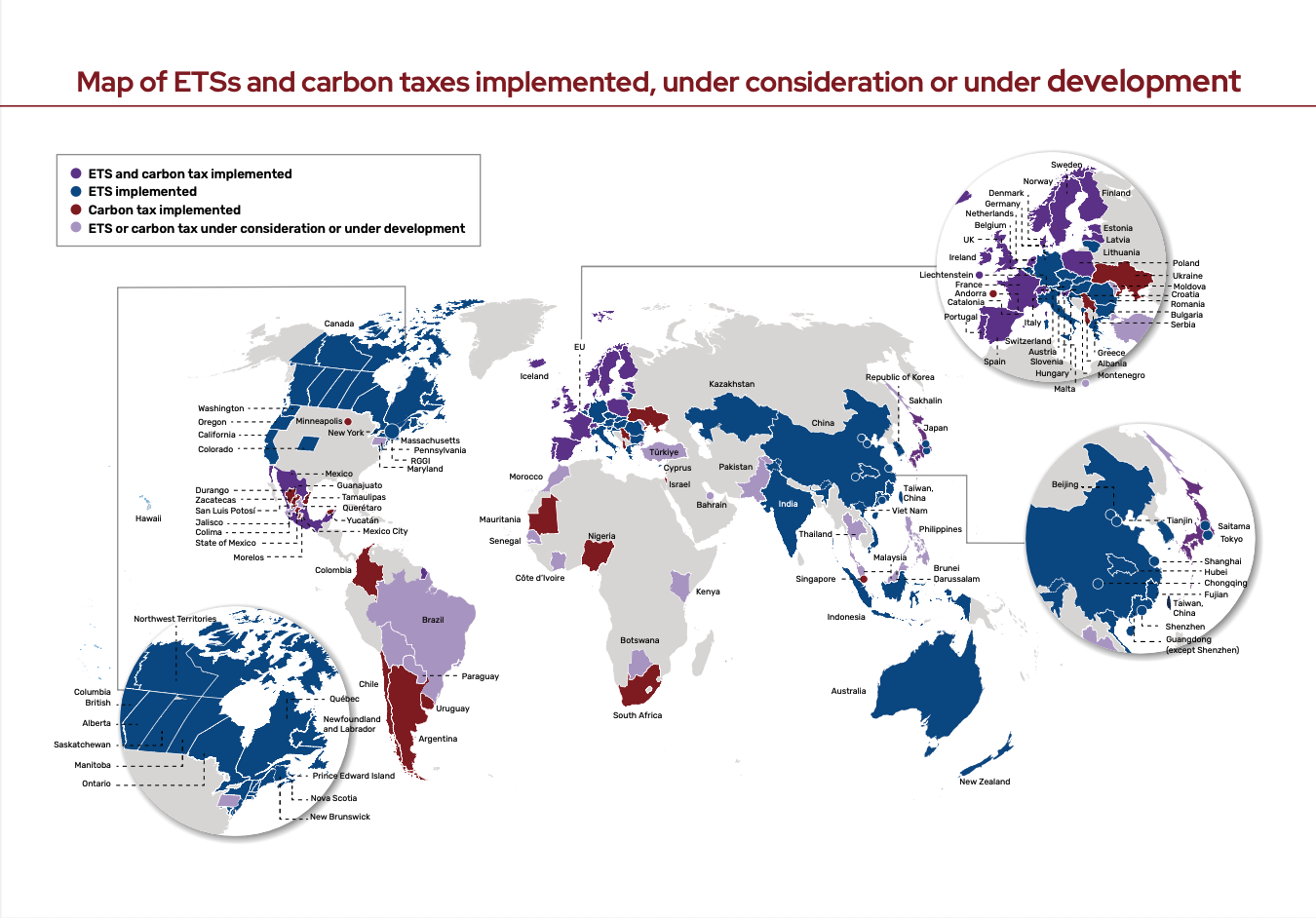
Source: World Bank — State of Carbon Pricing report 2026
The rules appear demanding, and in any event, the potential relief may be limited. Only 30% of global emissions carry any direct carbon price. The World Bank puts average global carbon prices at US$21/tCO2e, with most CBAM-facing countries pricing carbon below US$10/tCO2e. In summary, many operators will weigh whether the compliance burden justifies the saving.
The rules still serve a broader purpose. Brazil, Türkiye, and Vietnam are accelerating domestic ETS development partly in response to CBAM pressure, and the EU launched a coalition with China and Brazil this month to align carbon market methodologies.
Sign up for our June CBAM webinar with Normec Verifavia
Verified actual emissions can cut your CBAM exposure. But every exporter first needs a compliant monitoring plan — a detailed document that takes months to compile and is prone to errors.
At CBAMBOO we have teamed up with Normec Verifavia, a leading emissions verifier, to run a special free webinar on how exactly monitoring plans work. You will learn how to build a monitoring plan that meets CBAM requirements, set up the data infrastructure behind it, and get audit-ready efficiently.
Fertiliser Action Plan confirms that CBAM is here to stay
Fertilisers remain firmly rooted in the CBAM system despite complaints from industry lobby groups, based on the latest policy document for the sector from the European Commission.
The Fertiliser Action Plan, presented on 19 May, avoided any mention of potentially exempting fertilisers from CBAM and instead announced targeted financial support for domestic farmers facing rising production costs. It aims to reduce reliance on fertiliser imports, currently representing 30% of EU demand.
Copa-Cogeca called the plan a "profound disappointment" and renewed its call for a CBAM suspension. The farming lobby estimates the mechanism will cost EU farmers €820 million in 2026, rising to €3.4 billion by 2034 when it fully phases in. Those costs compound existing pressure from the war in the Middle East, which has disrupted fertiliser flows through the Strait of Hormuz and pushed energy prices up.
The suspension question now falls to legislators. Article 27a, a clause proposed in December's CBAM reform, would allow the Commission to temporarily suspend CBAM for specific goods in serious and unforeseen circumstances. But a majority of the European Parliament's party groups oppose the proposed article.
European Member States, who must also sign off on any CBAM reform, are currently negotiating their position on whether to allow the provision to remain in the text. At the Agriculture Council on 26 May, France and Ireland signalled that they remain unsatisfied with the plan and said that they still back the so-called emergency brake clause.
The European Commission insists CBAM and the ETS are instrumental to industry decarbonisation and will support competitiveness for farmers long term.
Legislators confirm tighter quotas for steel imports
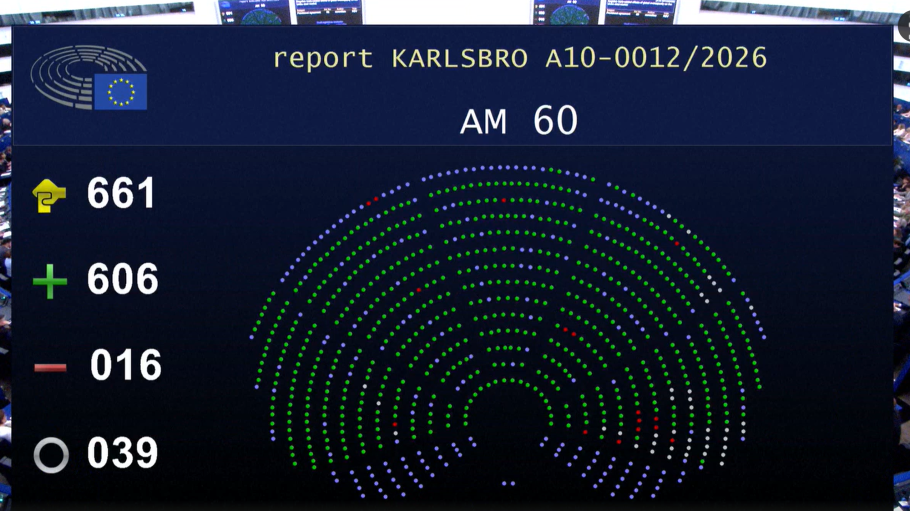
The European Parliament has adopted a sweeping new steel import regulation, significantly restricting material of foreign origin.
On 19 May 2026, the European Parliament voted with an overwhelming majority in favour of a new steel import regulation, replacing the safeguard mechanism that had regulated steel imports since 2019 and which was due to expire on 30 June. The new measure doubles the out-of-quota tariff from 25% to 50%, with total annual quota volume slashed by half from the previous framework.
A new "melt and pour" traceability rule will also aim to close a long-exploited loophole, according to the EU. From October 2026, importers must prove the country where raw steel was originally produced in liquid form. This targets the practice of routing Chinese slab through third-country processors such as Vietnam or Türkiye to misrepresent its origin. In the previous regime, the country of last substantial transformation was counted as origin.
Country-specific quota allocations remain under negotiation between the Commission and the WTO. They will be announced as part of the upcoming implementing regulation and must be in place before 1 July. From October 2027, the Commission will make use of melt-and-pour data to set country quota distributions, further restricting material from Chinese origin.
EUROFER, the association of European steelmakers, welcomed the vote and called for the measure to be extended further downstream, an additional step the Commission could consider in 2027.
The regulation arrives as CBAM enters its definitive phase. Importers now face a dual compliance burden: prove origin through traceability and report emissions to avoid default CBAM values. Suppliers that have moved early on decarbonisation and supply chain transparency will carry a material cost advantage in this new trade context.
European Commission publishes new FAQ
DG Taxud has published a new FAQ document, answering key queries around how declarants and operators should navigate the definitive period.
The document is a useful summary of the CBAM legislation. And in some cases it goes beyond what the legal texts say.
For example, the Commission announces in the FAQ that the requirement for verifiers to physically visit each site will not apply for installations based in Ukraine.
It is a gesture that acknowledges the great difficulties faced by Ukraine in complying with CBAM during wartime, although some politicians will argue that the Commission should have gone further and exempted Ukraine from CBAM altogether.
Do you still have questions? Just reply to this email and one of our CBAM experts will get back to you.