
News
CBAMBOO Insights #16
30 Apr 2026
EU institutions diverge on CBAM proposal
Consensus is emerging in Brussels on the need to expand CBAM to new product areas, even as lawmakers clash on the use of carbon credits and a potential 'emergency brake' in the system.
The next big update to CBAM will take the form of a new regulation, initially drafted by the European Commission. The European Parliament and the Council are now considering their response.
This process took a key step forward on 14 April, when MEP Mohammed Chahim published his 'rapporteur' draft report for the ENVI committee, staking out the Parliament's opening position. Separately, the Cyprus presidency of the European Council circulated their own draft text to Member States.
The core of the text looks to have established a broad consensus. Both Chahim's report and the Cyprus presidency's text broadly endorse the Commission's methodology for selecting roughly 180 downstream iron and steel products to add to CBAM from January 2028.

Source: Mohammed Chahim on LinkedIn
But there is disagreement on the so-called 'emergency brake' clause, which the Commission proposed as a new Article 27a. Chahim called for Article 27a to be deleted entirely. Yet the presidency's compromise text not only retains it but extends it, allowing exemptions to CBAM to run for up to two calendar years.
On carbon credits, the gap is equally wide. Chahim deleted the Commission's proposal to allow Article 6 Paris Agreement credits to count against CBAM obligations. He cited a risk of price volatility and concerns over environmental integrity. The presidency's text keeps the provision intact.
Three-way negotiations between the institutions can only begin once both the Parliament and the Council have formally adopted their respective positions.
Industry is not waiting for Brussels to debate. Steel distributor association EUROMETAL has gathered over 400 signatories calling for immediate extension of CBAM and tariff-rate quotas across all downstream steel CN headings.
On the other side, engineering association VDMA wants the extension halted entirely, citing the risk of inflation.
Commission publishes first-ever carbon border price
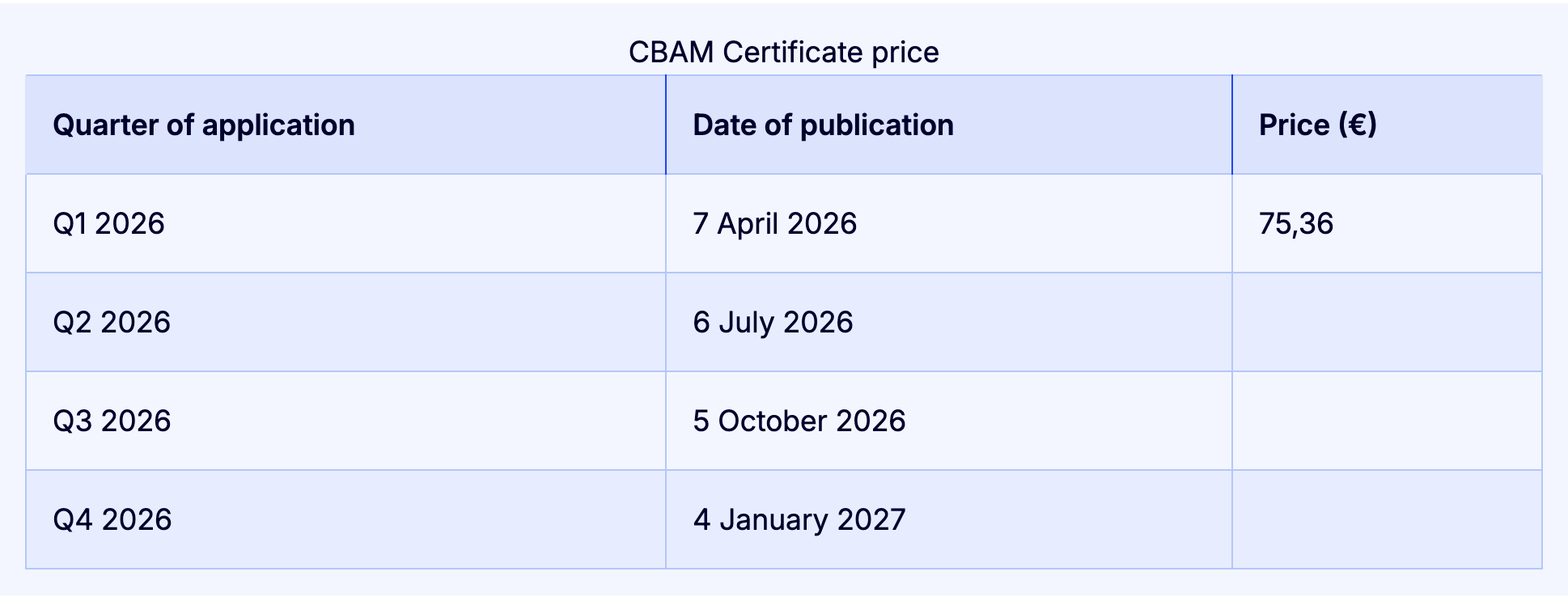
The European Commission has published the first-ever CBAM certificate price.
The price was set at €75.36 per tonne for Q1 2026, calculated from average EU ETS auction clearing prices over the quarter. Importers won't have to pay for CBAM until February 2027 — but the Commission will publish each of the four 2026 quarterly prices on the working day following the end of the quarter.
Carbon traded as high as €86 in January and fell to €63 by March, as investors reacted to geopolitical events and regulatory uncertainty.
Source: European Commission
Three more quarterly prices will follow in 2026. From 2027, the certificate price switches to weekly publication, tracking the carbon market in near real time. Additionally, the date of imports will be separated from the timing of certificate purchases, allowing for more sophisticated trading strategies to develop.
CBAMBOO at Tube 2026
This month, the CBAMBOO team headed to Düsseldorf for wire & Tube 2026, the leading international trade fair for the wire and tube industry.
For us, events like this are about more than visibility. Speaking directly with producers, importers and traders gives us a much clearer picture of the challenges companies are navigating on the ground, and how we can better support them in managing their CBAM costs.
It was a privilege to meet so many of you over the course of the fair, whether at our stand or across the various sessions and side meetings. The conversations were genuinely valuable, and we came away with a lot to think about.
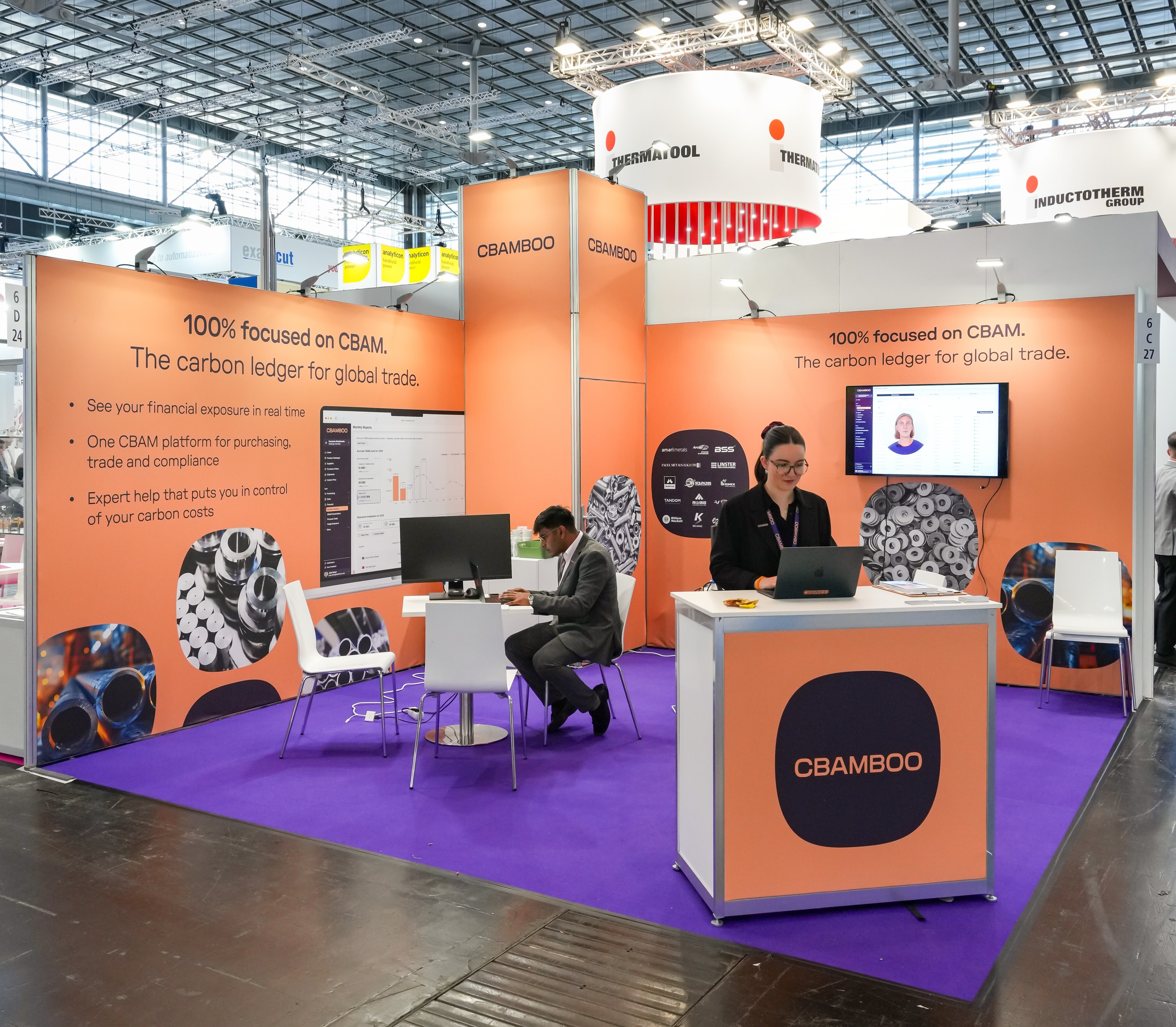
If we met at wire & Tube and you'd like to continue the conversation, we'd be glad to speak to you. Just book a meeting.
France warns of verifier shortage
Not enough verifiers will be ready in time to service the huge demand for CBAM audits in 2027, France's national competent authority warned at a recent webinar.
The warning contradicts the European Commission, which insists that accreditation timelines are on track for on-site visits to take place in early 2027.
What is not in doubt is that it will take time for verifiers to get themselves ready for CBAM audits, which are mandatory for any installation whose customers want to rely on actual values when they submit their 2026 CBAM report next year.
Each verification body must first pass its own audit to confirm that it has the technical resources for CBAM work. That process alone takes up to two months. The first accredited verifiers are not expected be available until autumn 2026 at the earliest — leaving tens of thousands of facilities to verify before the September 2027 deadline.
Additionally, accreditation will move at different speeds across EU member states. Only three countries are currently accepting applications: the Netherlands, Sweden, and Italy. France will open before summer. Verifiers must apply in the same member state as their ETS accreditation to streamline the process.
Speaking at the webinar, the French authorities reminded the audience that although verification certificates are currently being issued, these are not legally valid for CBAM. Any actual values being reported should in turn only be treated as indicative values.
Importers can already act by engaging non-EU suppliers to build monitoring plans and prepare for verification.