
News
CBAMBOO Insights #15
20 Mar 2026
EU leaders agree on carbon market flexibilities
European leaders reached an uneasy consensus on next steps for the EU's flagship carbon policy last week, recommitting themselves to the Emissions Trading System while outlining steps to soften the regime.
At a meeting of the European Council on 19 March that was dominated by discussion of war in the Middle East, EU member states confirmed the status of the ETS as a central initiative to reduce the continent's dependency on fossil fuels.
Yet at the same time they made clear that the ETS will be watered down in key ways — meaning lower costs for CBAM payers than previously indicated.
The key changes:
- New ETS benchmarks are expected to accommodate "industry concerns" — and be more generous than expected
- The free allocation phase out is likely to be extended in the period beyond 2034, on the basis that the current timeline is considered too steep
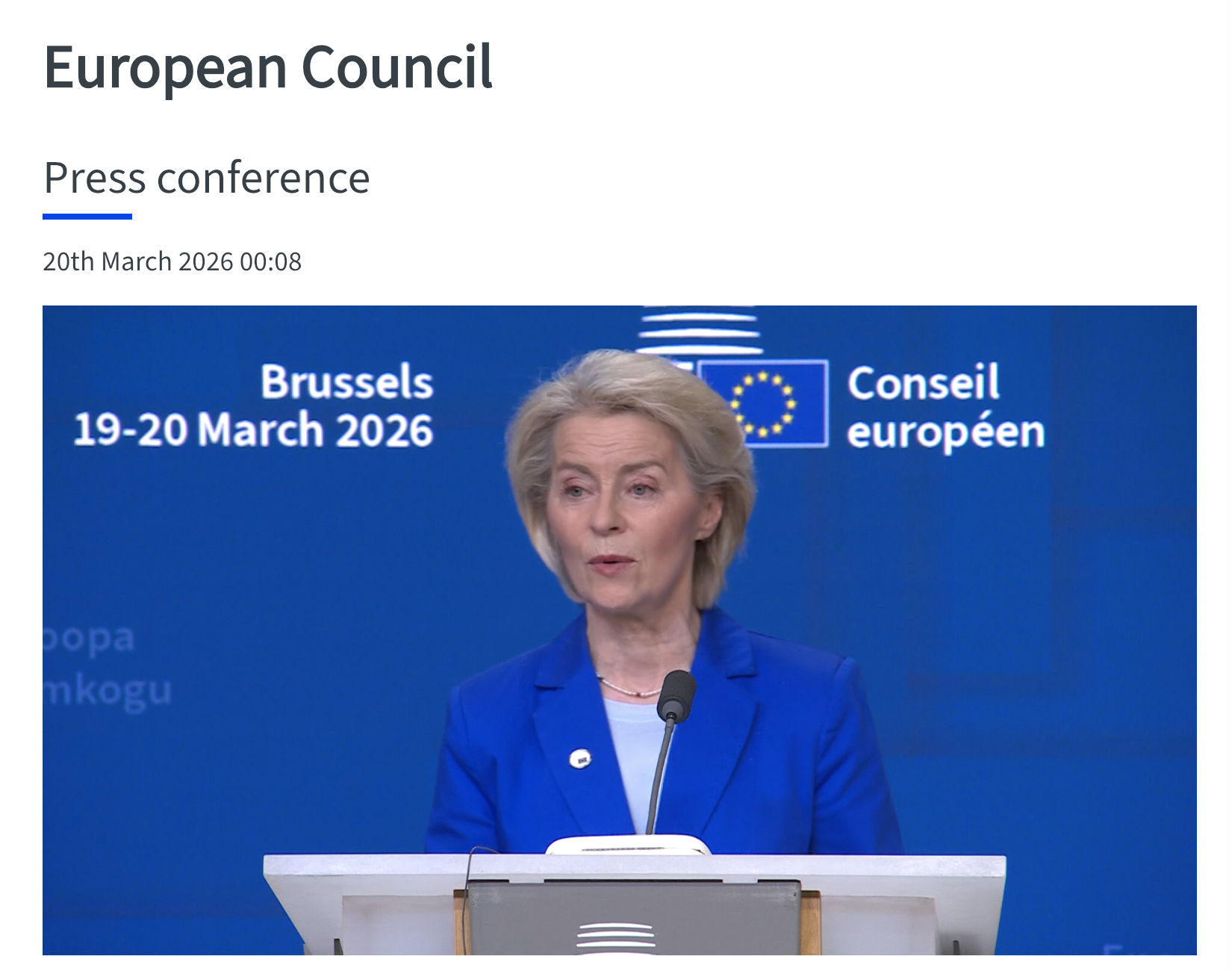
The Council's resolution followed sharp disagreements over the ETS in recent weeks. Italy's prime minister had called for suspending the carbon market outright. Key industrials and thought leaders pushed back, arguing the ETS drives investment in low-carbon, home-grown solutions.
"The emissions trading system is working. It has massively reduced gas consumption and because of that, it has reduced our dependency on imports of fossil fuels. It has also driven major investments in the energy transition."
In the coming days, the Commission will publish updated ETS benchmarks. CBAM benchmarks applicable from 2027 flow directly from these figures. Commission President Von der Leyen said the new numbers will reflect industry concerns, signalling lower carbon cost exposure for both domestic producers and CBAM importers than previously expected.
The July ETS review will carry more structural weight. Von der Leyen confirmed an "ETS investment booster" redirecting up to €30 billion of ETS revenue to decarbonisation projects across the Union. She also promised a more realistic free allocation trajectory beyond 2035, translating into a softer CBAM phase-in at the back end of the mechanism.
10 days left until authorisation deadline
European importers have until 31 March to secure authorised CBAM declarant status, or risk having shipments blocked at customs.
After that date, unauthorised importers must wait up to 120 days for their application to be processed before moving goods again. Companies exceeding the annual 50-tonne threshold face delays and penalties if they miss the deadline.
To apply, companies must submit their application in the EU member state where they are registered, along with supporting documents.
If you need help getting authorised, our team can support you. Get in touch at hello@cbamboo.com.
Commission kicks off CBAM webinar series with focus on verification
DG TAXUD held the first in a new CBAM webinar series on 19 March. The session drew over 3,500 registrants as significant confusion persists across the industry, especially around verification.
Applications for verifier accreditation, a system through which independent companies receive a licence to audit CBAM data, will start this coming May. Once accredited, verifiers can perform mandatory in-person site visits from January 2027 and the first verification reports should be available in Q1 2027.
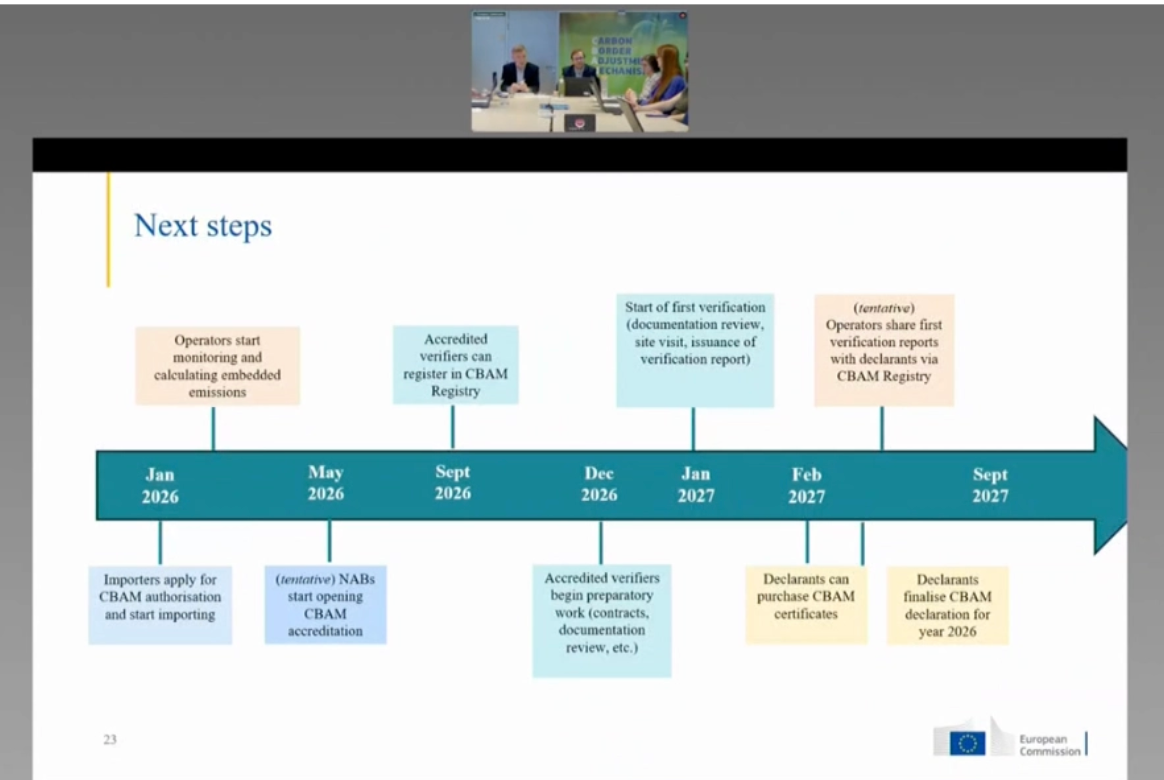
Data quality at installation level remains a bottleneck however. Many facilities worldwide are unfamiliar with CBAM methodology, including the requirements for a Monitoring Methodology Document for which no template exists.
With verification expected to take a minimum of two months, the timeline remains extremely challenging for importers and suppliers alike.
Importers need to gauge their chances of obtaining verified emissions data from their suppliers to forecast 2026 costs. Suppliers and importers should align now to ensure installation-level documentation is verification-ready before year end.
Officials also confirmed that a public consultation on the Implementing Act governing recognition of carbon prices paid in origin countries will open in early April.
CBAMBOO supports installations around the world with pre-verification work. Get in touch if you or your suppliers require some help.
Legislators oppose suspension clause in early talks
European Parliament negotiators attacked a clause in the CBAM expansion proposal that would allow temporary suspension of goods from the mechanism.
The ENVI committee opened discussions on 17 March on a package proposed last December, which would extend CBAM to 180 finished products. Buried in the technical provisions, Article 27a allows exemptions for goods facing "serious unforeseen" consequences. The fertiliser sector believed the clause was designed as a carve-out for them, given expected food price rises.
Senior Commission officials had previously promised fertiliser exemptions and retroactive application of the suspension mechanism.
Martin Becker, Deputy Head of Unit at DG Taxud, later clarified in a webinar with CBAMBOO that the provision was designed for wars or natural disasters, not foreseeable price rises.
Dutch MEP Mohammed Chahim (Social & Democrats) leads Parliament's negotiations on the file and publicly opposes the clause. A majority of MEPs across political groups also back his position.
Trilogue negotiations between Parliament, Council, and Commission are expected to run until summer. Once consensus is reached, the Commission will adopt the final law for application in 2028.
UK refineries push for carbon border protection
The UK fuels industry wants in on the UK carbon border tax that starts in January 2027.
Fuels Industry UK has argued that UK ETS carbon costs put domestic refineries at a competitive disadvantage against cheaper, less-regulated imports, and could lead to the closure of the four remaining sites in the country.
Henry Tufnell, Labour MP for Pembrokeshire, told the Commons last week that without CBAM inclusion, refineries will close and production will shift abroad, in a perfect example of carbon leakage.
Tufnell said that the transition to a low-carbon economy should not be at the cost of deindustrialisation, and argued that the oil industry needed to be preserved as a core element of sovereignty and defence in times of high geopolitical uncertainty.
The UK Government responded that oil products are difficult to account for and would be challenging to add to CBAM from the start.
The debate comes as the UK government opened a call for evidence on the future of the UK downstream oil sector and a public consultation on the implementation details of the CBAM.