
News
CBAMBOO Insights #14
20 Feb 2026
Commission retreats from exempting fertilisers from CBAM
A top EU official has shut down rampant speculation that fertiliser importers could be exempted from CBAM under a so-called "emergency brake" clause.
Martin Becker, who works directly on CBAM for the European Commission, made clear that a proposal to retroactively remove fertilisers from CBAM was highly unlikely to go ahead.
The proposal to exempt fertilisers from the new carbon pricing regime had been championed by French and Italian agriculture ministers. The EC's Maroš Šefčovič said in a news conference in January that Article 27a, a recently-proposed amendment to the CBAM law, should apply to fertilisers. He noted that the market was experiencing cost pressure owing to the introduction of CBAM and the Russia-Ukraine war.
The Commission even published guidance that such a rule could be applied retroactively — triggering shock and uncertainty across the market.
But speaking at a webinar alongside Gabriel Rozenberg, CEO of CBAMBOO, Becker made plain that the Commission does not expect that to happen.

"The intention of [Article 27a] was an exceptional emergency brake, in a situation that is truly extraordinary such as a war or a pandemic." — Martin Becker
Price shifts caused by the introduction of CBAM could not be used as an excuse for removing CBAM altogether, Becker said.
He noted that the proposed law had yet to be taken up by the European Parliament, and said that, given the opposition to Article 27a already seen among MEPs, the rule was "very unlikely" to remain in its current form. The proposal could be adopted before summer 2026.
His comments follow a blog post by influential MEP Mohammed Chahim, who pushed back against Article 27a. Several industry groups also warned that the vague suspension clause creates legal risk, showing weak consensus behind the measure.
Politicians rattle carbon markets with mixed signals on ETS and CBAM
Conflicting messages from EU leaders triggered a sharp drop in carbon prices after fresh debate on industrial competitiveness and carbon costs creating new waves of uncertainty around ETS and CBAM.
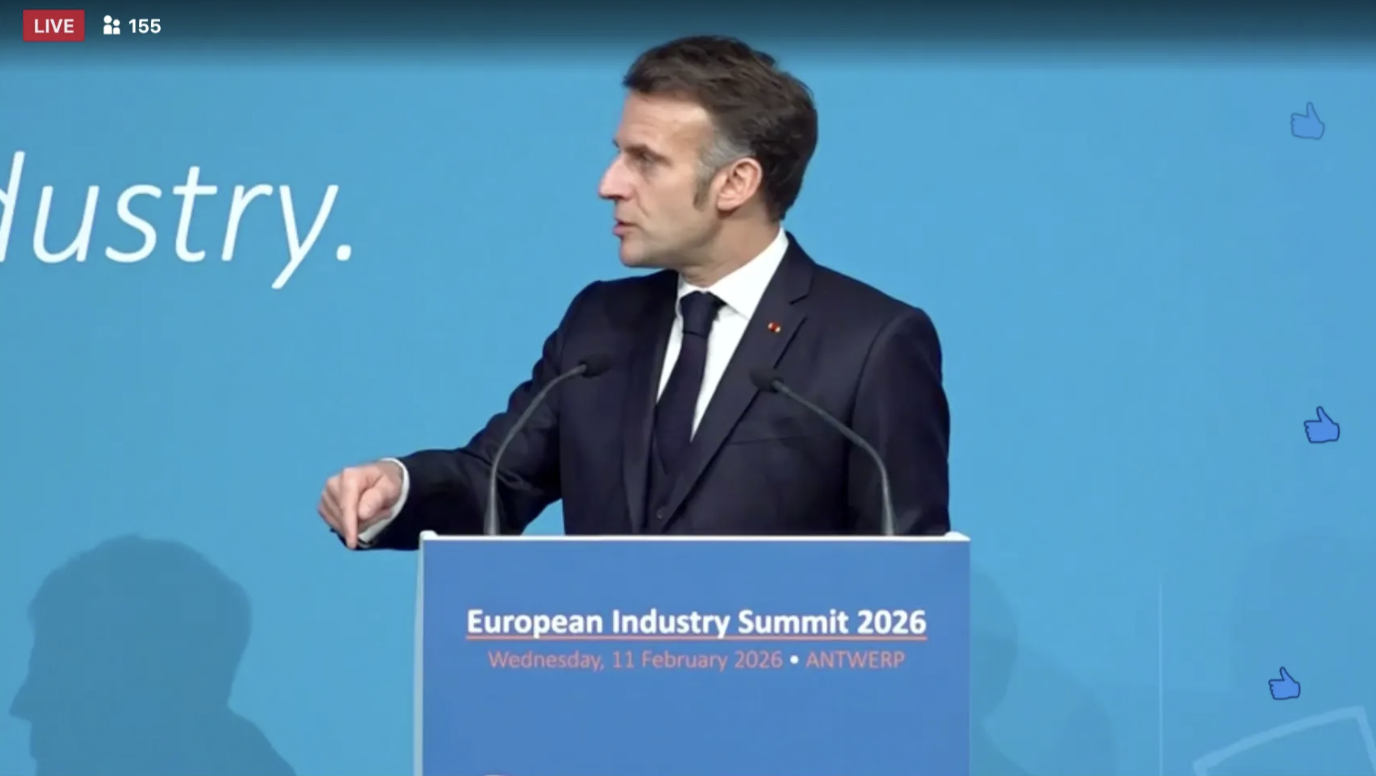
On 12 February, leaders met in Antwerp for an informal retreat on the future of European industry and climate policy. Several governments raised pressure to ease carbon rules as energy costs stay high and European industry struggles.
Germany's new chancellor, Friedrich Merz, echoed domestic industry calls to revisit the pace of free allocation phase-out under the EU carbon market. Eastern European states also pushed back against stricter carbon pricing. Markets reacted fast with allowances prices down to €67 per tonne on 17 February.
In contrast, Emmanuel Macron defended the ETS and CBAM as core competitiveness tools. He said carbon leakage must be avoided and policy certainty will drive investment decisions in decarbonisation projects, linking the mechanism directly to Arcelor Mittal's recent low carbon steel investment decisions in France.
"CBAM is the only way to prevent circumvention and not to create new vulnerabilities." — Emmanuel Macron
The European Commission faces a credibility test. It must balance industrial pressure with stable carbon rules. Final ETS benchmarks, which set the number of free permits EU producers will receive from 2027, are due in April. Broader market reforms will follow in July as part of a scheduled "review". Commission President Ursula von der Leyen will present different policy options at the 19 March Council meeting, which could range from granting more free allocations to sectors at risk to weakening the total volume of emissions in the market, the "cap".
Fertiliser import slump fuels CBAM debates
An estimated 80% drop in EU fertiliser imports in January 2026 has sparked a dispute between market participants over CBAM costs and supply risks ahead of the spring season.
Farmer groups, including COPA-COGECA, say high and uncertain CBAM charges froze transactions, justifying repeated calls for a temporary suspension. Nitrogen fertilisers account for around 46% of EU overall consumption, with more than 30% typically imported. Farm representatives warn that lower import volumes during peak application months could tighten supply and weigh on yields, ultimately affecting consumers.
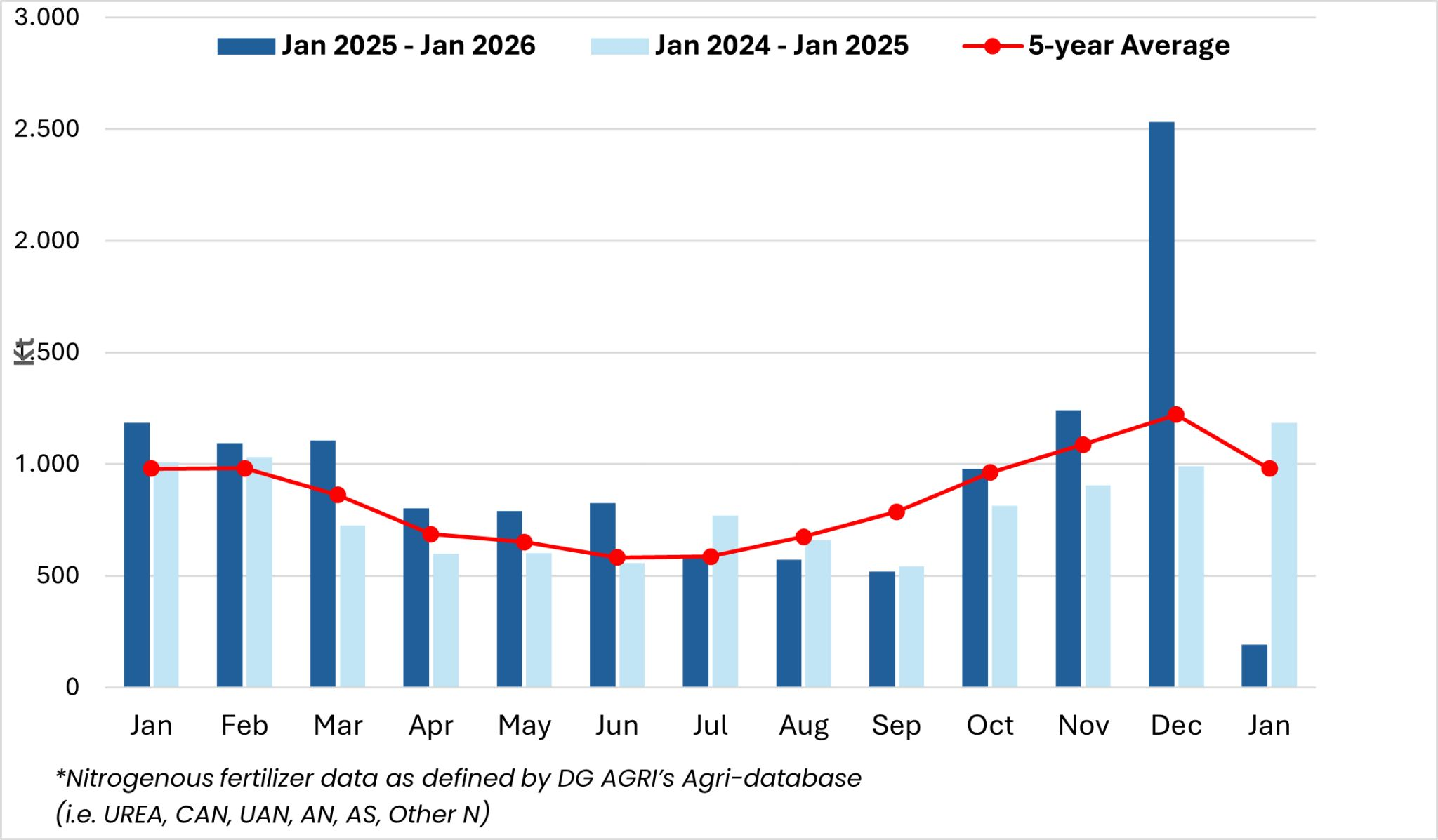
Others point to mixed political signals and talk of retroactive adjustments, which made pricing the carbon premium difficult. Domestic producers argue traders frontloaded purchases in December before CBAM entered into force and then reduced orders once stock levels rose and expectations shifted.
Fertilizers Europe notes that EU plants operate with roughly 50% lower carbon intensity than many foreign suppliers and that a strong domestic base supports food security and reduces reliance on fossil fuels and Russian inputs, advocating for the implementation of CBAM to favour low carbon products.
UK releases draft rules for CBAM in 2027
The UK Government has published draft legislation that sets the main design and implementation rules for its own CBAM starting in 2027.
The text is open for public consultation until 24 March 2026, with a second draft package planned for Spring 2026, so the full framework should be finalised well before launch and give importers enough time to prepare.
Earlier primary legislation already confirmed a £50,000 rolling 12-month import threshold for in-scope goods and introduced quarterly reporting from 2028 onward.
Overall, the draft points to a more pragmatic administrative model than the EU approach. Authorities will publish a quarterly CBAM rate per tonne of product by sector, reflecting the carbon price due and adjusting for free allocations that domestic producers still receive under the UK ETS. Importers can then calculate their liability by multiplying verified supplier emissions data by the published rate.
As in the EU system, importers can claim carbon price relief where producers already paid a recognised carbon price, and the draft already lists eligible schemes and criteria. Default values will follow later this year, though uncertainty remains about their level and punitive effect.
Australia issues report paving the way for CBAM implementation
The Australian government has released the final results of its Carbon Leakage Review, urging the implementation of a CBAM-like measure.
The study started in 2023 and assessed the risk that domestic carbon-intensive industries would relocate abroad when facing higher carbon prices. The government consulted with industry stakeholders throughout the review process to understand competitiveness pressures and potential policy responses.
Australia applies a price of carbon on its domestic industry through a system called Safeguard Mechanism. Under this scheme, production sites emitting more than 100,000 tonnes of CO2 in a year have to pay for their emissions. Due to this threshold, not all carbon leakage exposed commodities are fully covered by a carbon price.
The report recommends applying a carbon tariff on imports of a selected group of commodities such as cement and clinker in priority, as domestic output is fully carbon priced, with further expansion to other products subject to further studies and industry consultations. Rolling out an EU-like CBAM system would help Australia decarbonise its industry and support the emergence of low-carbon innovation.
Stakeholders involved in the process, such as Rio Tinto, also suggested regional coordination of a carbon border tax regime, to prevent supply disruptions.