
News
CBAMBOO Insights #13
20 Jan 2026
World's first CBAM comes into force on schedule and starts to reshape global trade
Following months of speculation and uncertainty, the EU's Carbon Border Adjustment Mechanism became a reality for tens of thousands of companies on 1 January.
The long-planned start of CBAM's Definitive Period followed a last-minute regulatory blitz by the European Commission, which unveiled a trove of implementing rules shortly before Christmas. The longest of them, covering default values, ran to 2,400 pages of data tables and was only enacted on 31 December.
More than 20,000 companies now face direct CBAM obligations — and many of them have taken a wait-and-see approach, leaving them potentially exposed to higher default values and more complex emissions accounting than expected.
But the market seems to finally be catching up. According to the European Commission, over 12,000 importers have applied for CBAM authorisation and just over 4,000 had obtained authorised declarant status as of 1 January.
Any companies planning to import CBAM goods in 2026 must apply for authorisation by 31 March or risk seeing their shipments blocked at customs.
In an initial report, the European Commission announced that 10,483 CBAM shipments have cleared customs. However, traders have flagged delays linked to missing TARIC codes, which identify the CBAM nature of a shipment and are critical for smooth customs clearance.
CBAMBOO kicks off 2026 with record-breaking webinar
A big thank you to everyone who attended our first webinar of the year on 6 January. We broke our record with more than 600 people registering and were delighted to see a high level of engagement.
Our team explained the entire structure of the CBAM legislation, set out tips on calculating emissions and CBAM exposure, and walked the audience through all the latest legislative updates.
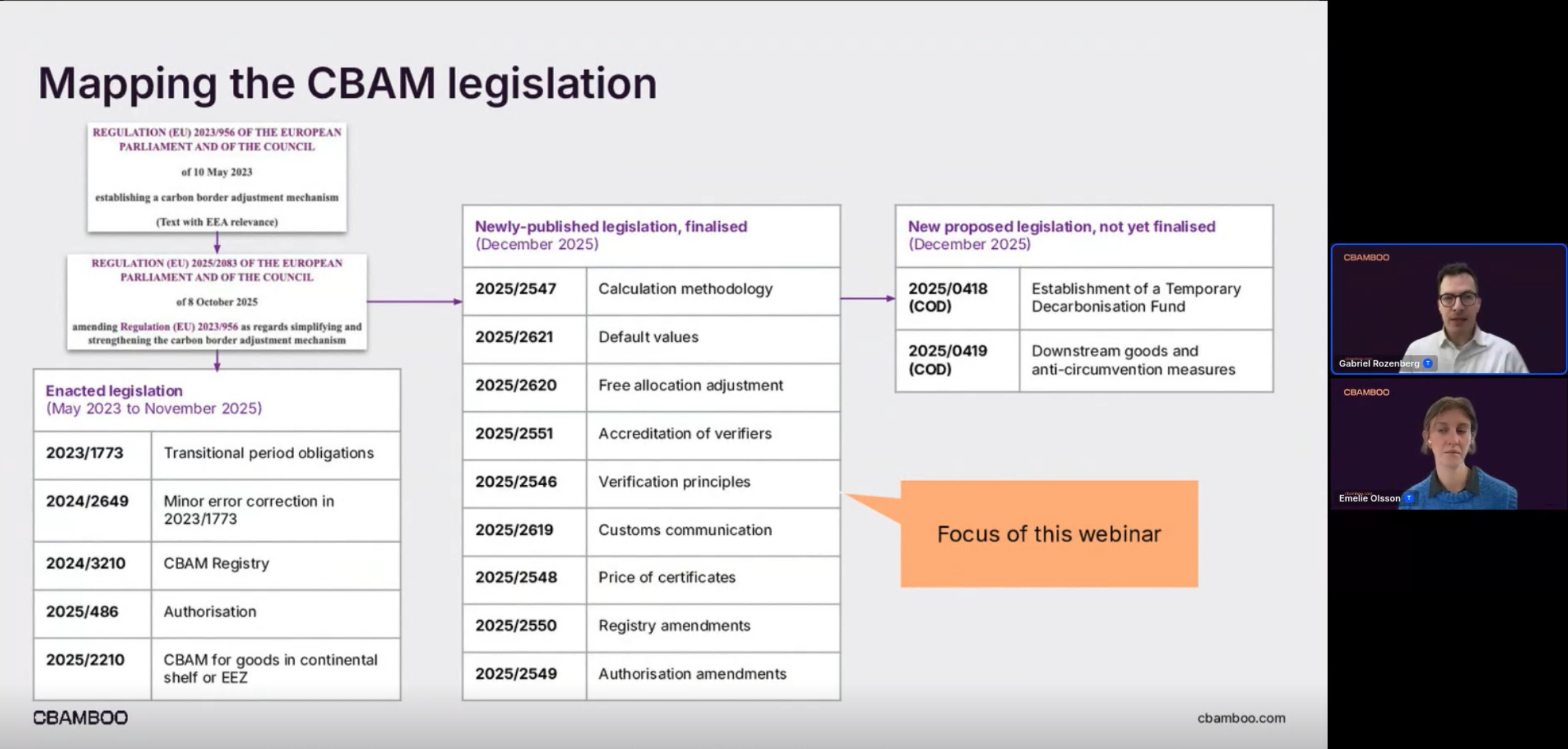
"The world's first CBAM is a stricter and more financially impactful regulation than most people expected." — Gabriel Rozenberg
Emergency brake on fertilisers could apply retroactively
The European Commission is facing pressure on all sides over fertiliser prices, after controversially announcing that it might retroactively remove the products from the scope of CBAM in the future.
Under pressure from French and Italian agriculture ministers, the European Commission signalled it could intervene in the event of "serious and unforeseen circumstances." At a news conference on 7 January, European Commissioner Maroš Šefčovič announced that this could take place retroactively.
Yet the Commission currently lacks any legal basis to suspend fertilisers under existing CBAM law. A legislative proposal unveiled in December 2025 would go some way to address this, by introducing Article 27a, an "emergency brake" designed to address unintended price shocks, such as sharp rises in agricultural prices.
The proposal still requires full legislative scrutiny. This would delay any activation until mid-2026 at the earliest. And it is unclear whether the retroactive element will remain.
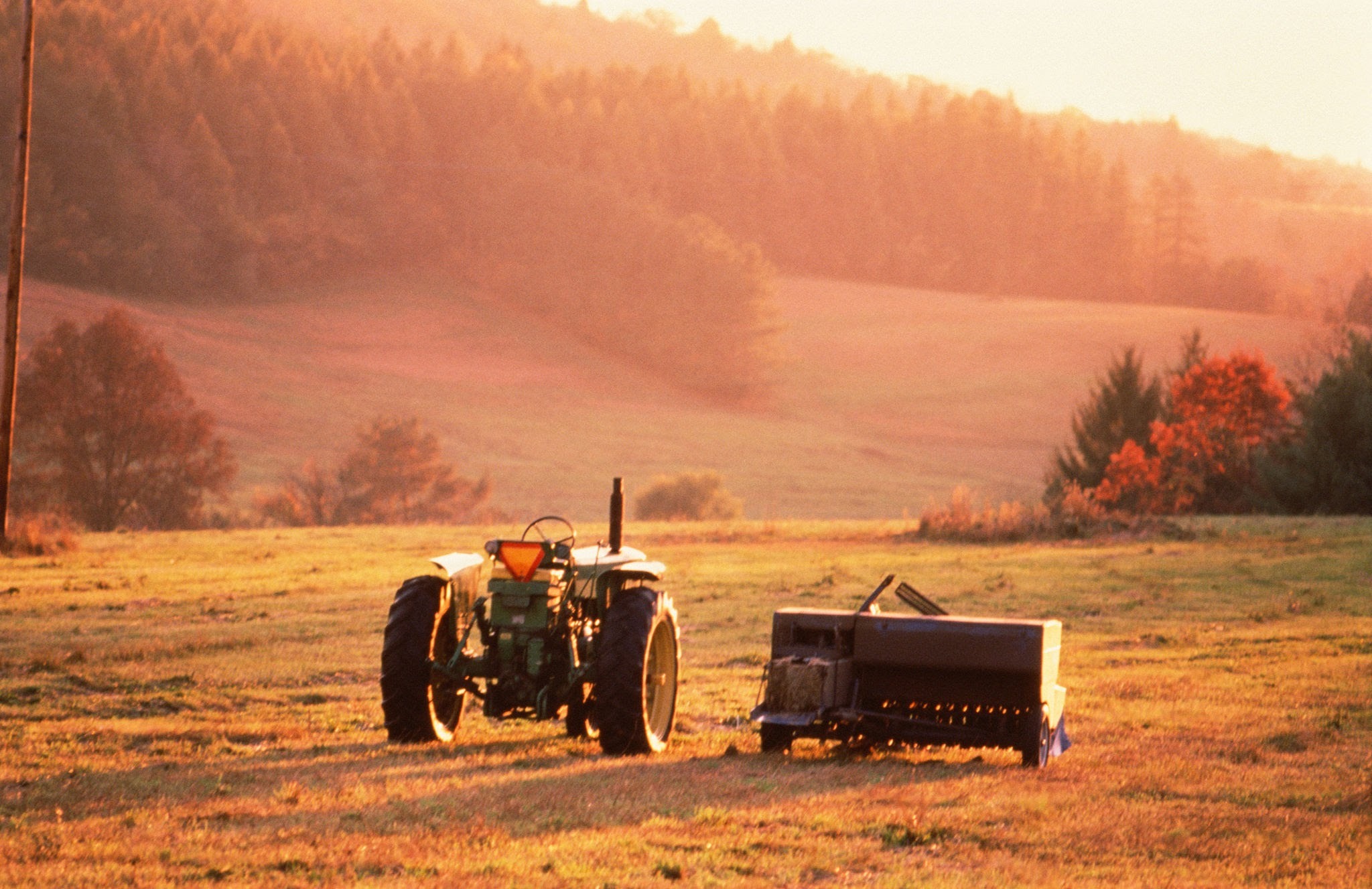
The announcements triggered confusion and renewed uncertainty across the market. European producer Yara also criticised the Commission's conflicting signals. It warned that suspending CBAM would undermine its investments in low-carbon ammonia and cancel the very incentives the mechanism is designed to create.
Multiple sources estimate that CBAM charges on fertilisers could drive inflation of up to 7%. Importers, traders, and farmers would share the cost.
EU-UK carbon market link negotiations to start
The European Commission confirmed that negotiations to link the EU Emissions Trading System with the UK's could start as early as this month. Commissioner Wopke Hoekstra later said the EU is ready to conduct talks swiftly.
Once implemented, the linkage could exempt £7 billion of UK exports from the EU's carbon border adjustment mechanism (CBAM), which entered into force on 1 January 2026.
The timing means the exemption would arrive too late for the EU CBAM rollout but could apply before the UK launches its own CBAM in 2027.
At a press conference in December, Hoekstra stressed that the UK would not receive any CBAM exemption until the ETS linkage is fully operational.
Market reactions followed: both UKA and EUA prices rose as traders priced in the potential link. A full linkage would result in the UK's carbon price being pushed up to match the EU's. The latter has remained consistently higher since the UK detached its ETS from the EU's after Brexit.