
News
CBAMBOO Insights #12
20 Dec 2025
Final CBAM rules land, raising the bill for importers
The European Commission has finally published the full implementing framework for the definitive phase of CBAM, following weeks of delay and speculation.
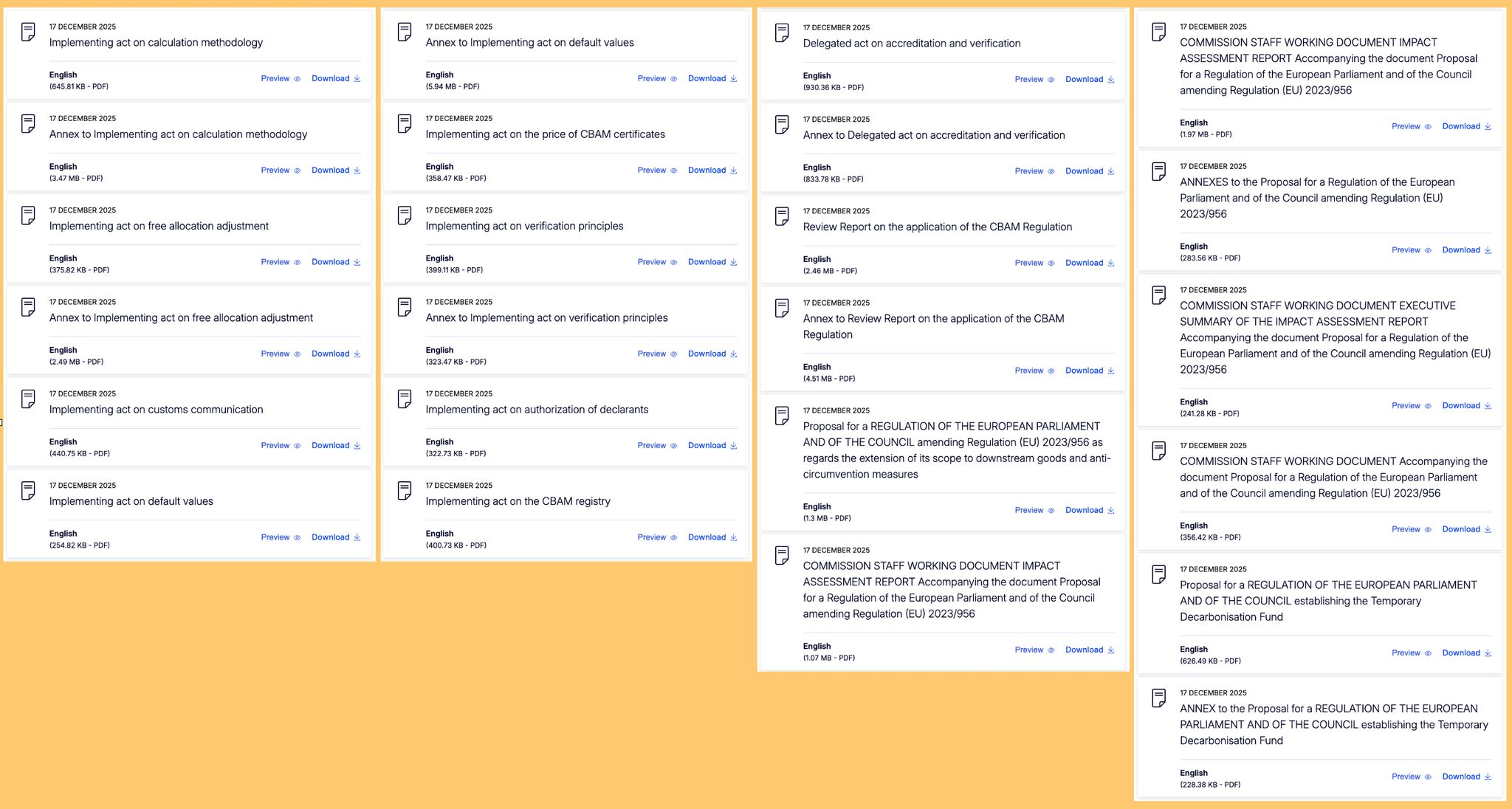
On 17 December, the Commission released 11 implementing and delegated acts covering default and benchmark values, emissions accounting, and verification rules. Member States had approved the core cost factors and methodology on 9 December, two weeks later than originally planned.
Default values and benchmarks triggered the most debate. The Commission set default values at generally high levels versus earlier drafts, and pegged the benchmarks at lower-than-expected levels. Both changes have the effect of raising costs for importers.
Default values set the emissions level for worst-performing imports by product and country. Benchmarks reflect best EU performance, above which imported emissions face CBAM charges.
The punitive effect will phase-in gradually over time, a compromise obtained by Member States to contain cost shocks in the first year. Default values now carry a relatively modest 10% markup in 2026, rising to 20% in 2027 and 30% from 2028 onwards.
But in most cases, importers will still have a strong financial incentive to avoid the use of default values and to obtain actual emissions data from their suppliers. According to CBAMBOO estimates, using actual values instead of defaults could cut CBAM charges by up to 60% in 2026.
Avoiding default values will require rigorous emissions data and third-party, in-person verification of all installations before September 2027. That creates a bottleneck in 2026 when accredited verifiers are still scarce. Importers will compete for access, creating a first-mover advantage for those who already collect supplier data and pre-audit their value chains.
CBAM to extend downstream and become harder to circumvent
CBAM is set to expand to 180 new categories of products, from washing machines to cookware, automotive parts, and more, in a major shake-up that will bring 7,500 additional importers into the system for the first time.
The planned new categories were announced this week and are due to be added to CBAM from January 2028. Roughly half of the newly-affected companies are SMEs.
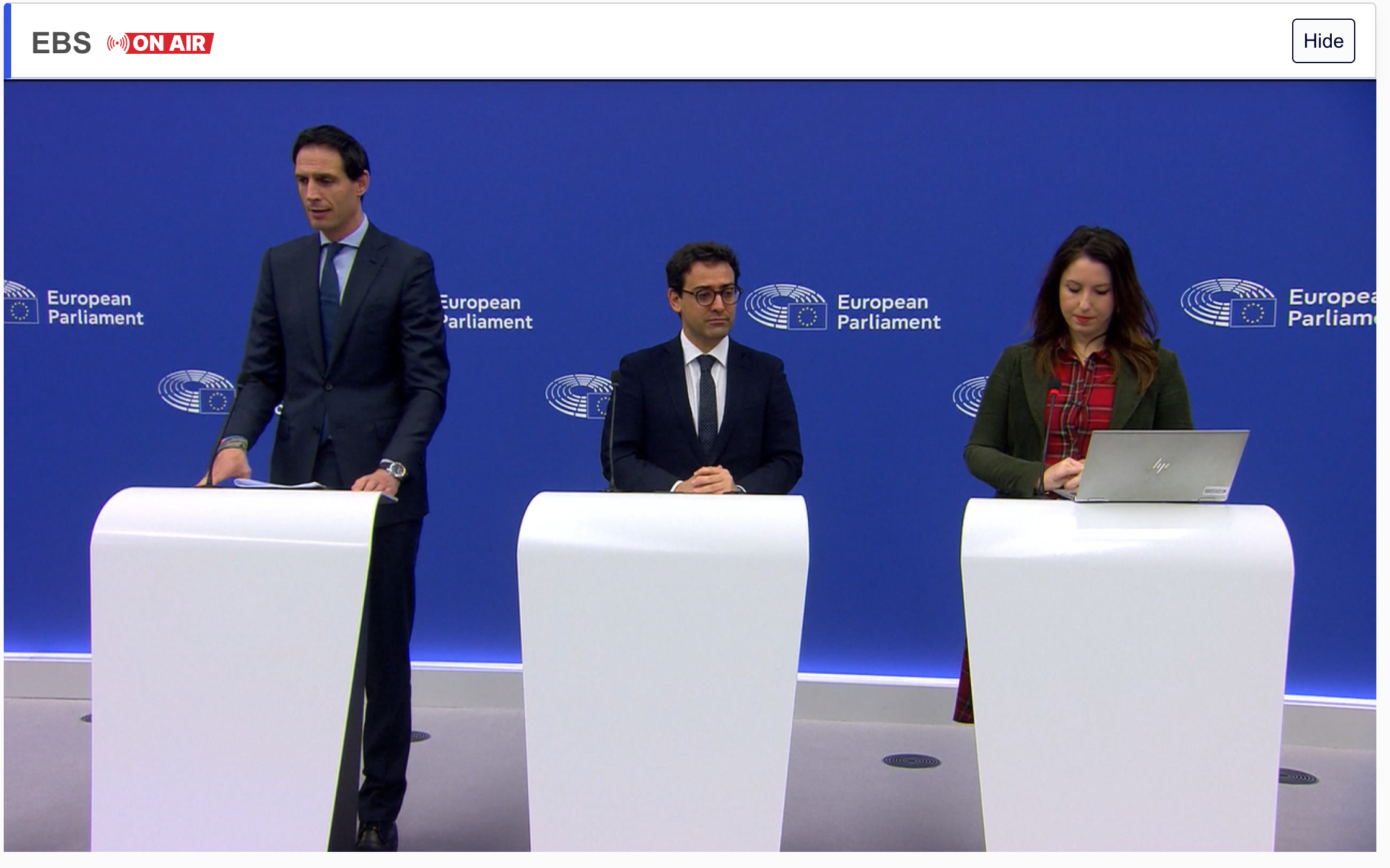
Commissioners Hoekstra and Sejourné presented the proposed reforms on 17 December. The announcement is a response to pressure from manufacturers of so-called downstream products, such as car engines and garden tools, who are at risk of seeing production migrate outside the EU if they are not included in CBAM.
The Steel & Metals Action Plan, issued in March 2025, first flagged this risk and made clear that the EU would prioritise steel and aluminium products in the first expansion of CBAM.
"CBAM truly is a very good idea but it's also like a good cheese with some holes in it. We want to close these loopholes. And make sure the system works, that it's simple, fair to everyone, in Europe and abroad, and that it's effective." — Commissioner Hoekstra
Importers have two years to prepare. Complying with emissions data collection will grow increasingly complex as the scope expands to finished products, especially given dependencies across multi-tier supply chains.
The proposal also aims to tackle circumvention. It would empower the Commission to act within three months of detecting abuse patterns, potentially requiring importers to provide extra documentation to use actual emissions values. Otherwise, higher, country-specific default values would apply. The proposal leaves further enforcement details open, delegating them to future legal measures.

Authorisation still required for imports: act now
From 1 January, CBAM goods from importers who have not applied to be authorised CBAM importers will be blocked at the border.
That reality has been obscured in the flood of legislation this year, CBAMBOO believes. The picture is made more complicated by a "temporary flexibility" introduced in the Omnibus simplifications passed in October.
The true picture is as follows:
- From 1 January 2026, anyone importing CBAM goods must have previously applied for the status of authorised CBAM importer. Without this application, your imports are blocked.
- From 1 April 2026, imports will only be allowed if the importer either a) is authorised or b) applied to be authorised before 31 March 2026. There will be no exceptions.
Multiple National Competent Authorities have confirmed that unless a declarant has submitted an application to the Member State where they are registered, shipments will be blocked after 1 January as customs and national authorities have enabled data sharing.
Submitting an application as soon as possible should therefore be every importer's priority.

Requirements vary across Member States, and each NCA may request different documents. To ensure applications are processed smoothly, importers should contact their national authorities directly.
EC acknowledges special circumstances for fertilisers
The fertiliser sector, expected to be particularly hard hit by carbon costs, secured a small win in the final CBAM implementation rules unveiled this month.

On 17 December, Commissioner Séjourné acknowledged the difficult circumstances for Europe's agricultural sector. Fertiliser importers using default values in 2026 will face a capped punitive markup of just 1%, unlike other sectors whose liability is inflated by 10%.
Importers have long warned that CBAM costs could trigger a spike in food prices, creating inflationary pressure directly passed on to consumers.
Separately, the proposed CBAM reform now includes an "emergency brake" clause, allowing the Commission to temporarily remove products from CBAM if their inclusion causes "severe harm related to the impact on the prices of goods."
The terms of the proposed clause seem to suggest that the Commission is concerned about the risk to food prices if CBAM is passed directly onto the agricultural sector.
However, the emergency brake would only take effect once the legal text is formally adopted, a process that could take up to a year. Meanwhile, importers have just two weeks to prepare for tracking liabilities on 2026 imports.